
Two common situations
- One co-owner wants to equip their own space: the charger is connected to their own meter or to a sub-meter, and the cable runs through the common areas.
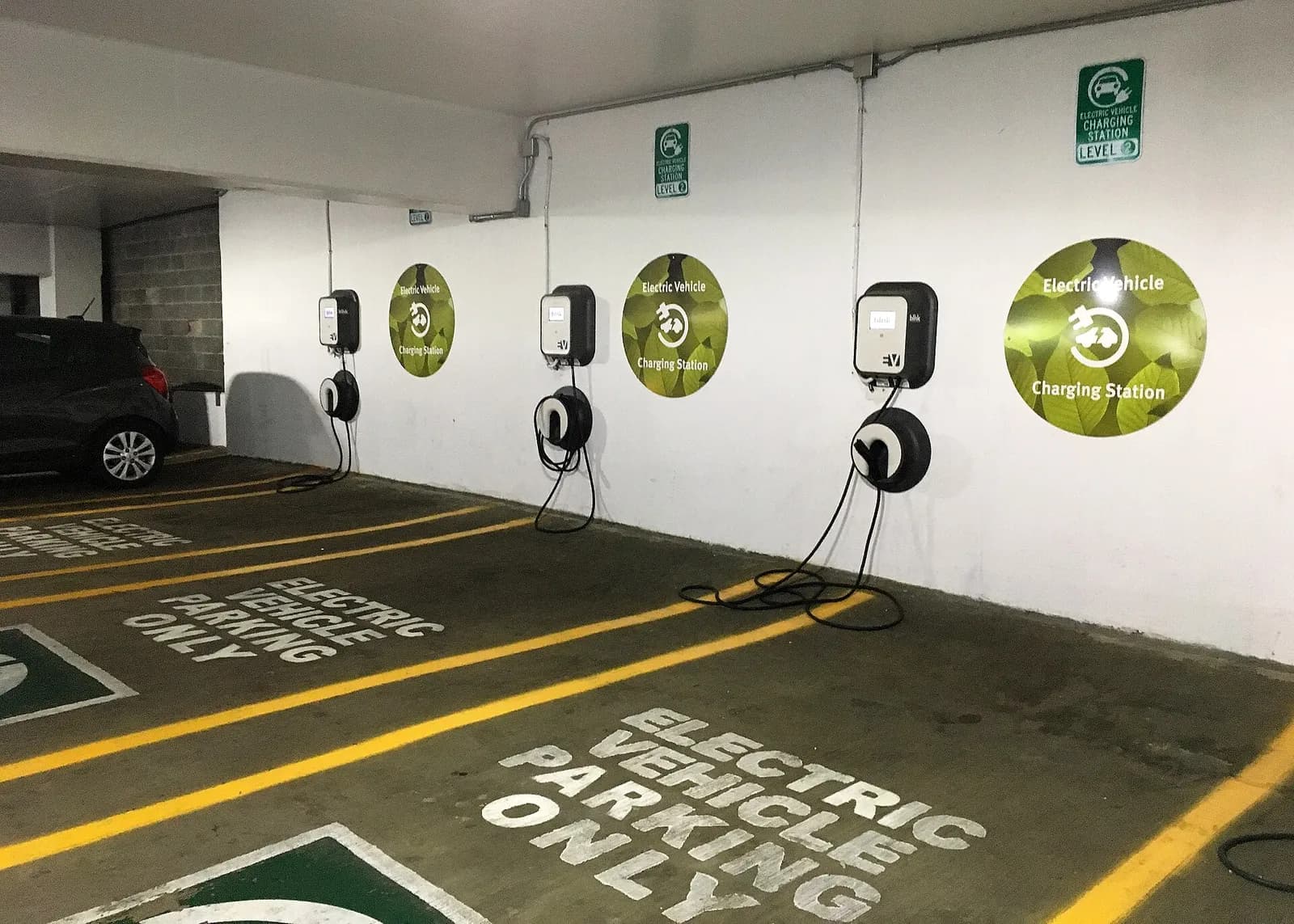
- The co-ownership wants to equip the car park: a shared infrastructure is planned for several spaces, with shared load management and metering per user.
In both cases, running cables through the common areas means informing the property manager (syndic) and, depending on the co-ownership rules, obtaining the approval of the general meeting.
The steps of a project in an apartment building
- Initial discussion: we gather the plans, the location of the meters and the number of spaces involved.
- Site survey: survey of cable routes, available power and car park constraints (ventilation, fire compartments, access).
- File for the syndic: description of the work, outline diagram, responsibilities and how electricity will be billed.
- Decision at the general meeting, if the co-ownership rules require it.
- Installation, compliance inspection by an approved inspection body and commissioning.
Sharing power without a full upgrade
A building does not have unlimited power. Dynamic load balancing shares the available power between chargers according to the building's consumption, rather than sizing the grid connection so that every car can charge at full power at the same time. This is often what makes the project possible without a costly connection upgrade from Sibelga.
Who pays for the electricity?
Each charger's consumption is metered. Depending on the set-up chosen, it is either billed directly to the co-owner's meter or recharged by the co-ownership based on each charger's reading. We recommend a system that makes this recharging simple and indisputable.