Why install a charger rather than use a socket?
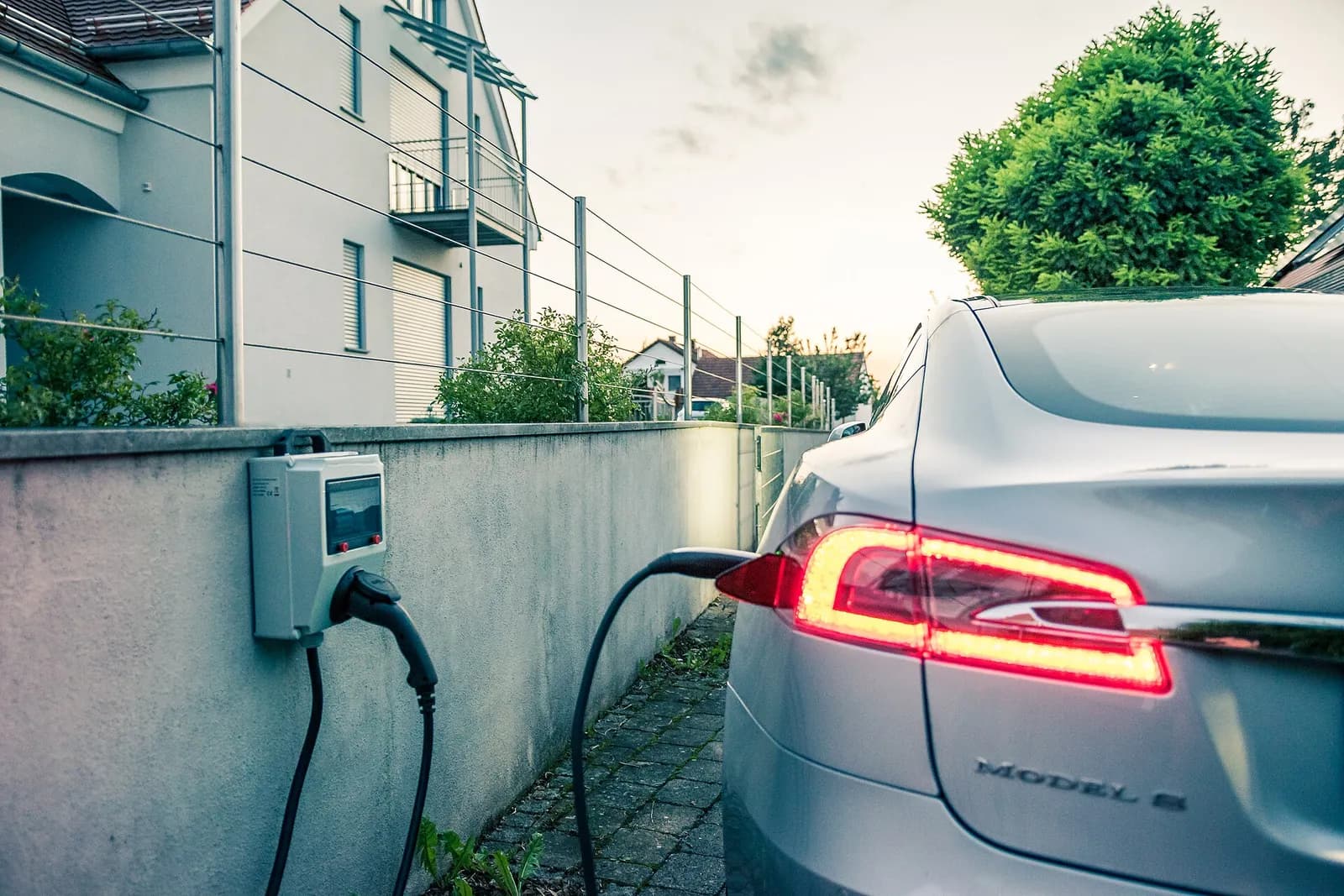
A household socket delivers around 2.3 kW, so a full charge often takes more than 24 hours. A wall-mounted charger delivers up to 7.4 kW on a single-phase supply and 11 kW on a three-phase supply, which means a full charge overnight for most cars.
A charger is also safer: a dedicated circuit, suitable RCD protection and an installation inspected by an approved inspection body. An ordinary socket is not designed to supply a high current for hours on end, every single day.
How does the installation work?
- Online configuration: you describe your situation (type of mounting, distance to the fuse box, grid connection). The configurator prepares your tailored quote in a few minutes.
- Advice: an expert recommends the charger that suits your car, your grid connection and your habits.
- Site survey if needed: for post mounting, a trench, or a fuse box that needs bringing up to standard.
- Installation: half a day for a standard wall installation, a full day for more complex situations.
- Compliance inspection: the new circuit is inspected by an approved inspection body, as required by the RGIE (Belgian electrical regulations).
- Commissioning: we set up the charger and its app with you.
What affects the price?
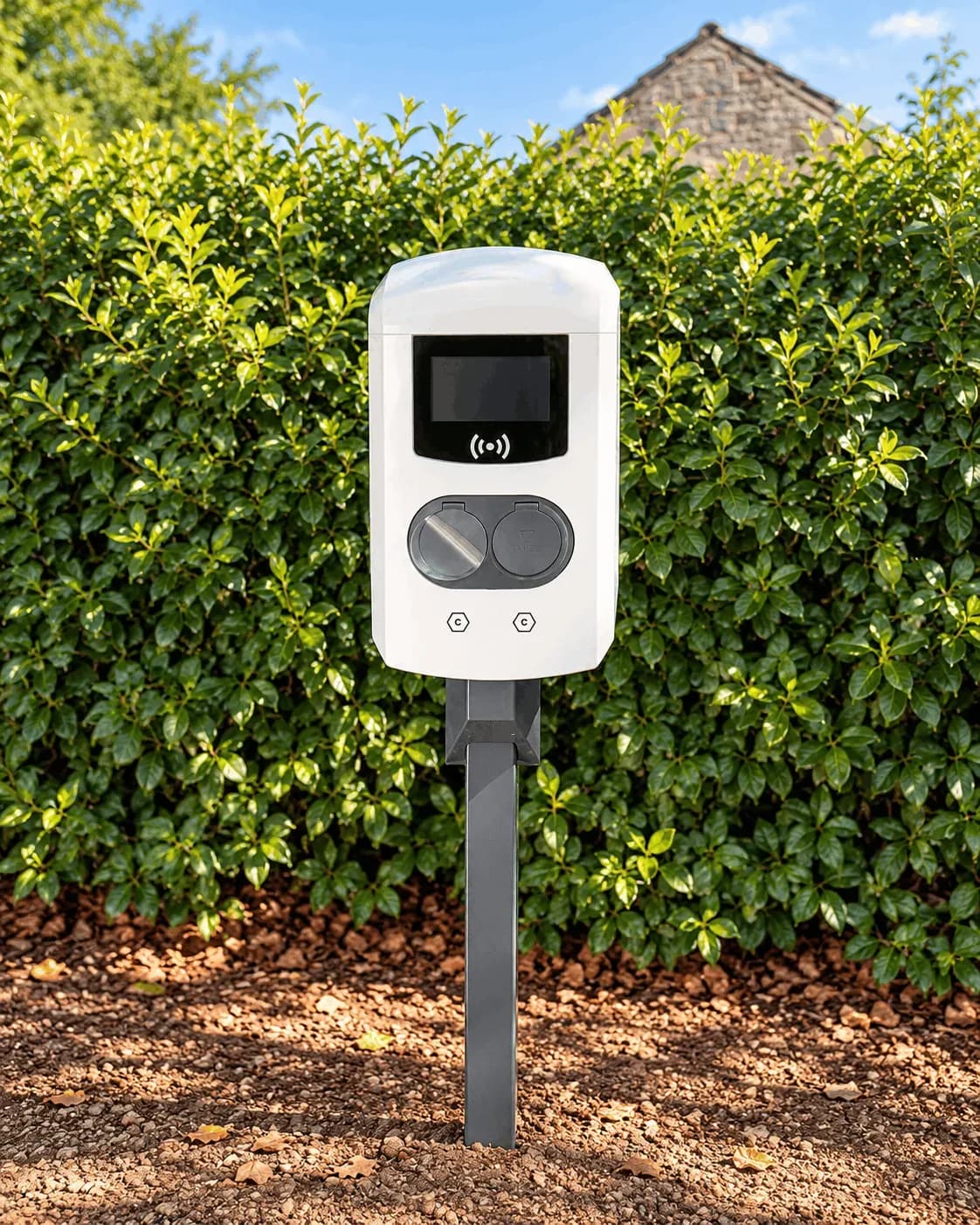
- The mounting: on a garage wall or on a post in the driveway.
- The distance between the fuse box and the charger location, and how the cable is run (surface-mounted, recessed, in a trench).
- The condition of the fuse box: available space, RCD protection, any work needed to bring it up to standard.
- Dynamic load balancing, recommended in most homes.
- The VAT rate: 6% under certain conditions for a home more than 10 years old, otherwise 21%.
The configurator takes all of this into account: you receive a detailed, transparent quote before you commit to anything.
Which charger should you choose?
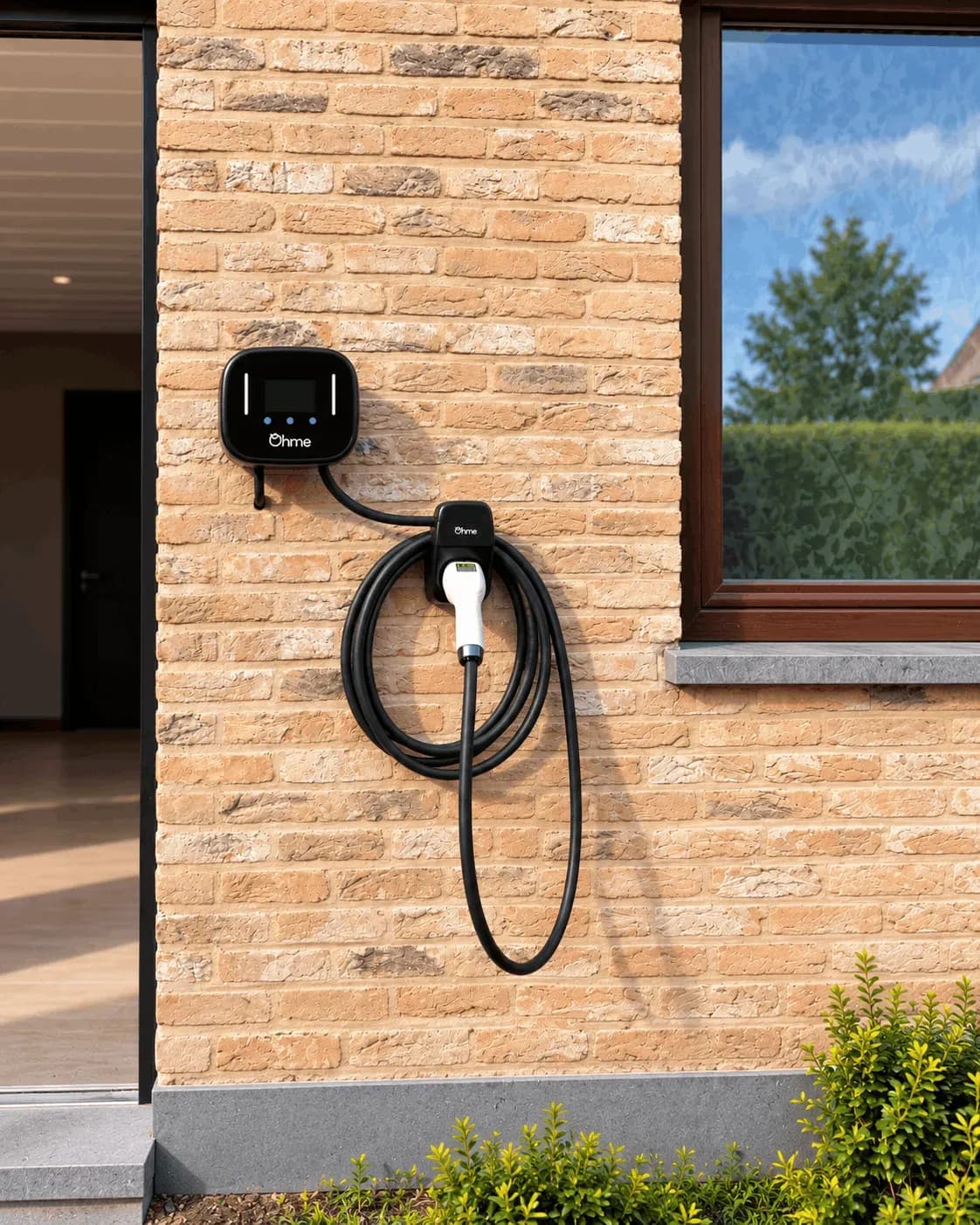
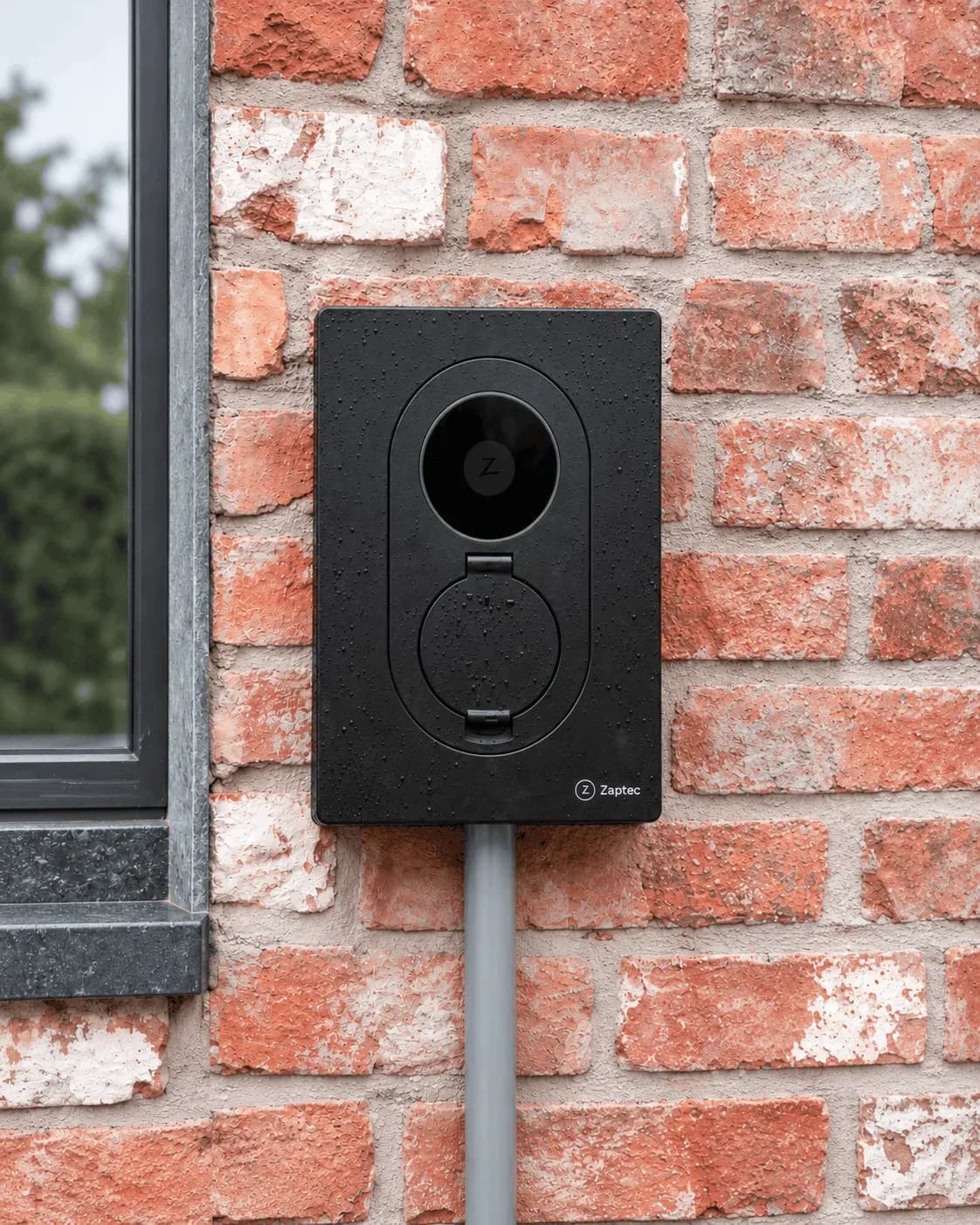
We install Ohme, Schneider Electric, Alfen, Zaptec chargers and many others. The choice depends mainly on three things:
- The power your car accepts on AC charging: many cars are limited to 7.4 or 11 kW.
- Your grid connection: single-phase, three-phase 3 × 400 V or a 3 × 230 V network, which is common in Brussels.
- How you use it: tethered cable or socket, app control, charging with solar panels.
How much will you save?
Charging at home costs considerably less than using public rapid chargers. Our savings calculator works out, for your car and your mileage, the cost of a full charge, your annual savings and how long the charger takes to pay for itself.