
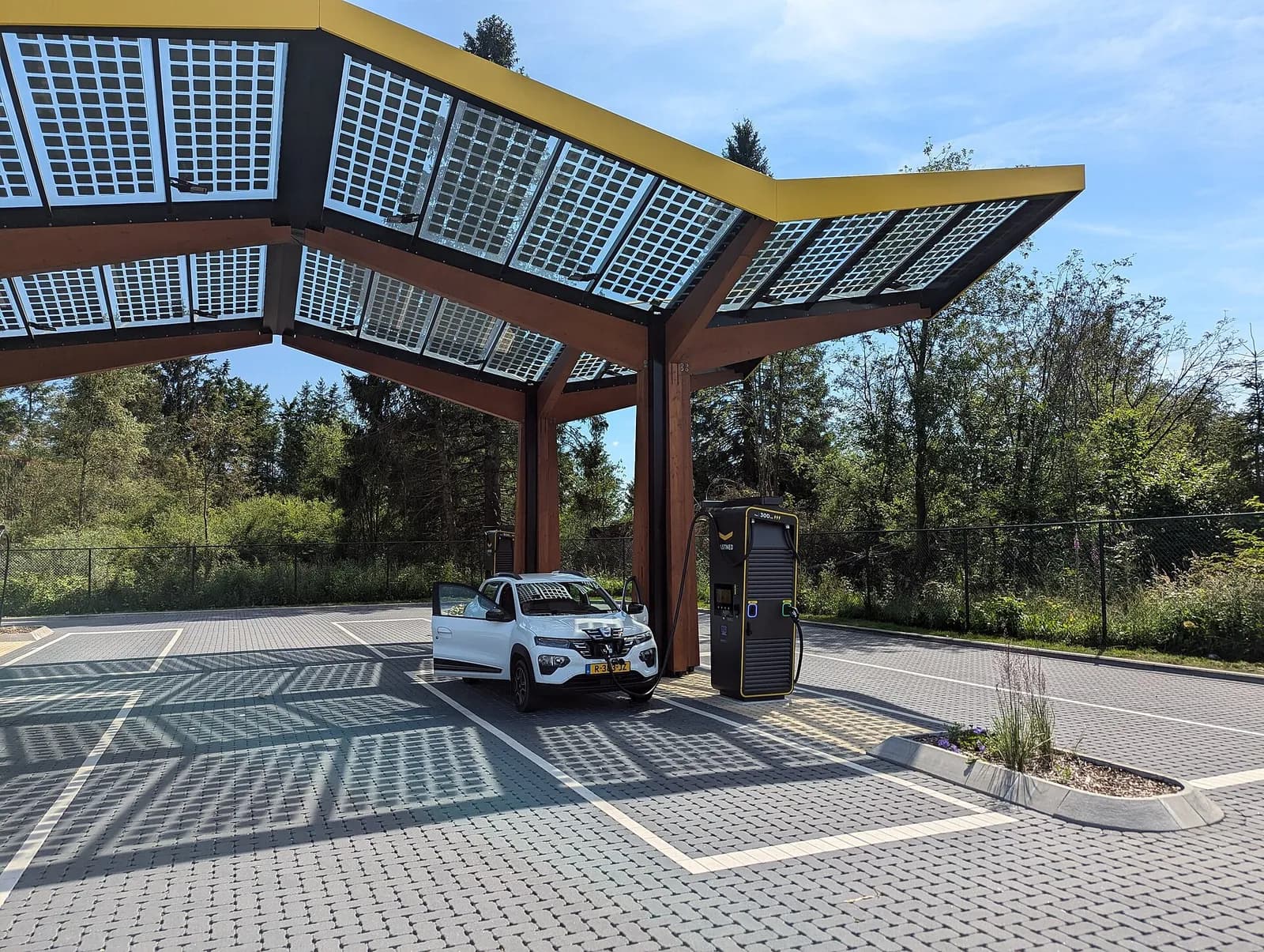
How does a solar EV charger work?
The charger continuously receives measurements of how much your home is consuming and how much your panels are producing. When production exceeds consumption, it sends the surplus to the car instead of exporting it to the grid. Depending on the model, a measuring sensor or an additional accessory is needed in the fuse box.
Charging modes
- 100% solar: the car charges only with the surplus. Ideal if it stays at home during the day.
- Mixed: the charger tops up from the grid to guarantee a set charge level by the time you need it.
- Fast: full-power charging, regardless of solar output, when you are in a hurry.
What to know before you start
- An electric car needs a minimum power to charge, around 1.4 kW on a single-phase supply: a small surplus is not always enough.
- Solar charging is most useful if the car is parked at home during the day: working from home, a second car, weekends.
- The value of a self-consumed solar kWh is the price of the electricity you do not have to buy, which is much higher than what you earn from exporting it.
Installation
We install the charger and any measuring sensor in the fuse box, set up solar mode in the app and check with you that everything works on a sunny day. The RGIE compliance inspection is included.