
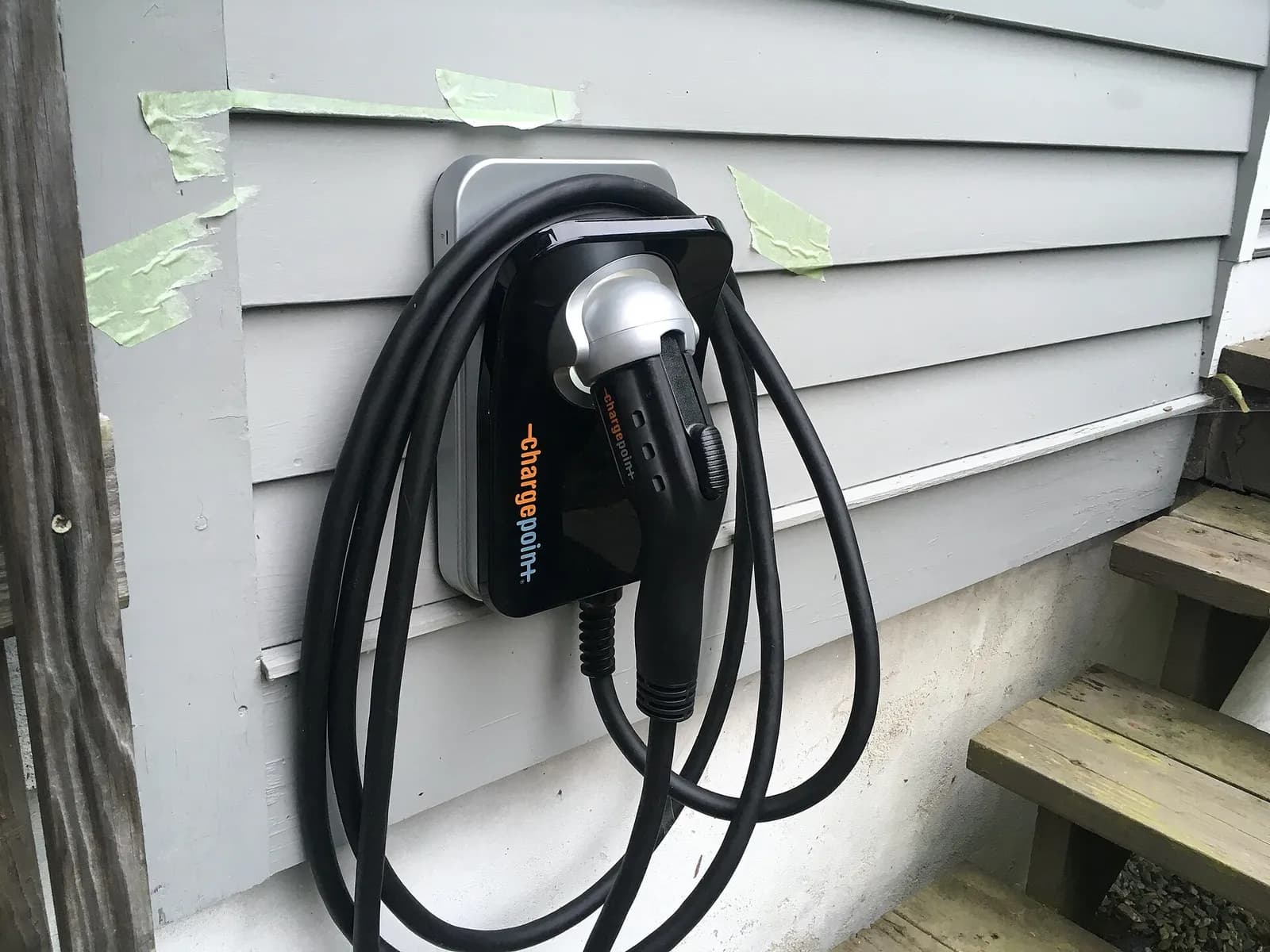
Most chargers come in two versions: with a tethered cable (permanently attached) or with a socket (an untethered charger) into which you plug your own cable. Choosing between a tethered and an untethered EV charger comes down mainly to your habits.
The tethered charger
The cable is attached to the charger: you unhook it, plug it into the car, and that is it.
- Pros: more convenient day to day, no cable to get out of the boot, no risk of forgetting it.
- Cons: the cable is always on show; its length is fixed when you buy it; outdoors, it is exposed to the elements.
The untethered charger (socket)
The charger has a Type 2 socket; you use the cable supplied with your car or one bought separately.
- Pros: a more discreet charger, ideal on a house front or in a shared car park; a cable of whatever length you want; compatible with several vehicles.
- Cons: you have to take the cable out and put it away every time you charge.
Tethered vs untethered: how to choose
| Your situation | Our advice |
|---|---|
| Private garage, one car | Our adviceTethered cable, for convenience |
| Charger on the house front or visible from the street | Our adviceSocket, for discretion |
| Apartment building or company car park | Our adviceSocket, to limit cables and damage |
| Several cars to charge | Our adviceSocket, or a cable long enough |
What about power?
Whether you choose a tethered cable or a socket makes no difference to charging power, provided the cable used is suitable (same cross-section, same number of phases). A cable designed for single-phase will limit charging on a three-phase charger.
State your preference in the configurator: our expert takes it into account when choosing your charger.